AI Lead Follow-Up Automation: What's Actually Changing in 2026 (And What Isn't)
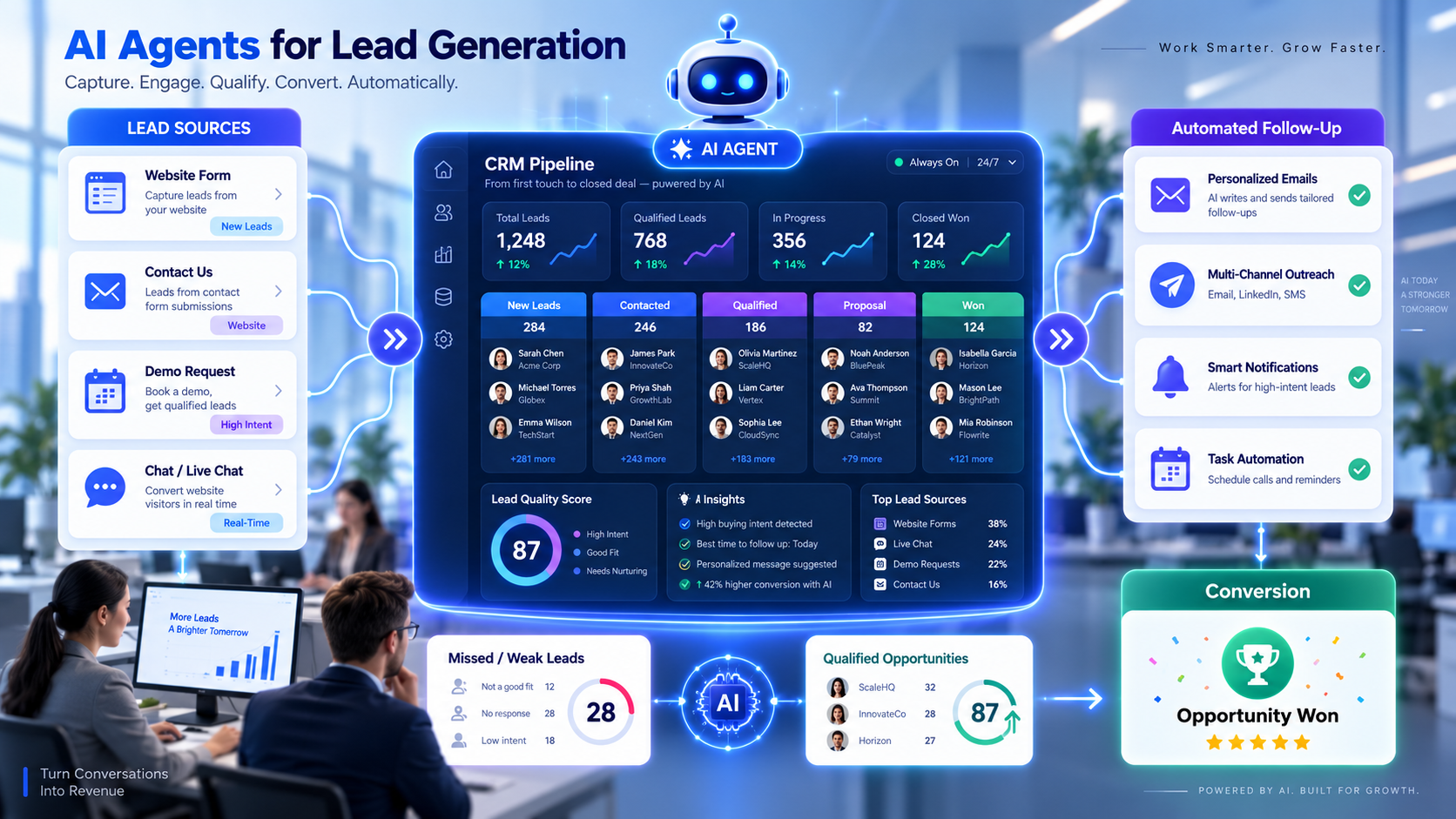
For years, "AI in sales" mostly meant a chatbot answering FAQs or a tool suggesting what to write in an email. In 2026, that's changing. AI is moving out of the chat window and into the actual workflow — deciding when a lead needs a follow-up, drafting the message, assigning the task, and nudging the rep before the opportunity goes cold.
This shift matters because follow-up timing is one of the strongest predictors of conversion. A lead that doesn't hear back within a reasonable window rarely converts, no matter how good the initial conversation was. AI lead follow-up automation is being adopted specifically to close that gap — not to replace salespeople, but to stop leads from silently slipping through.
This article looks at what's genuinely new, where the hype outpaces reality, and how to evaluate AI lead follow-up automation without getting distracted by feature lists.
The Real Cost of Slow Follow-Up
A lead's interest doesn't stay constant. Someone who fills out a form or messages a business is usually comparing a few options at the same time, and the business that responds first — with something relevant, not just fast — tends to set the frame for the entire conversation. Every hour of delay is time the prospect spends talking to someone else.
This is especially true for high-consideration purchases like real estate, education, or professional services, where the first meaningful response often determines whether a lead stays engaged at all. AI lead follow-up automation didn't become relevant because businesses suddenly cared more about speed — it became relevant because lead volume and channel spread finally outpaced what manual processes could realistically keep up with.
Why Follow-Up Timing Became the Priority in 2026
Lead volume isn't the bottleneck it used to be. Most businesses today have more inbound channels — website, WhatsApp, ads, referrals — than they have structured ways to respond to them consistently.
What changed in 2026 is the recognition that the real revenue leak isn't lead generation, it's response speed and consistency. Industry data on this has been fairly consistent for years: leads contacted within minutes convert at meaningfully higher rates than leads contacted hours or days later. AI lead follow-up automation exists specifically to close that response gap at scale, without needing a rep glued to their phone 24/7.
What AI Agents Actually Do Differently
Earlier CRM automation relied on static rules: "if form submitted, send email." It worked, but it was rigid and didn't adapt to context.
The newer generation of AI lead follow-up automation behaves differently:
- It reads context, not just triggers. Instead of a blanket rule, the AI looks at what the lead actually said or asked before deciding the next action.
- It drafts instead of just alerting. Rather than just notifying a rep "lead needs follow-up," it can prepare a relevant message for review or send.
- It routes based on intent, not just source. A high-intent WhatsApp enquiry and a casual form fill get treated differently — automatically.
- It escalates instead of looping. If a lead doesn't respond after automated attempts, the system hands it back to a human rather than repeating itself indefinitely.
The distinction that matters most here is whether the AI suggests the next step or executes it. Suggestion-only tools still depend on a busy rep noticing and acting. Execution-capable systems close leads that would otherwise sit untouched.
Common Mistakes Businesses Make When Adopting This
Adopting AI lead follow-up automation badly is worse than not adopting it at all. The most common mistakes:
Automating the first message but nothing after. Many businesses set up an instant auto-reply and stop there. The real value is in the follow-up sequence over days, not the first five minutes.
No review step for AI-drafted messages. Fully autonomous outreach without oversight can send tone-deaf or inaccurate messages, especially in industries like healthcare or finance.
Treating every lead the same. Automation without lead scoring just means faster, more consistent mistakes. Qualification should happen before follow-up logic kicks in, not after.
Ignoring the handoff to humans. If the system can't clearly tell a rep "this lead is ready for a real conversation," automation becomes a black box instead of a support tool.
A Quick Framework: Is Your Follow-Up Process Automation-Ready?
Use this before adopting AI lead follow-up automation — not after:
| Question | Why it matters |
|---|---|
| Do you know your average first-response time today? | You can't measure improvement without a baseline |
| Is lead source data centralized, or scattered across tools? | Automation needs one source of truth to act on |
| Do you have basic lead qualification in place? | Automation without qualification treats all leads equally |
| Is there a clear point where AI hands off to a human? | Prevents leads from getting stuck in automated loops |
| Can someone review AI-drafted messages before they go out, at least initially? | Reduces risk of tone or accuracy issues |
If most answers are "no," the fix isn't more automation — it's fixing the process first, then automating it.
How Much Human Oversight Should Stay in the Loop
A pattern that holds up across industries: early-stage follow-up (first response, acknowledgment) can run fully automated for most businesses. Mid-stage follow-up (pricing questions, objections) works best as AI-drafted, human-reviewed. Late-stage conversations (negotiation, closing) should stay human-led, since that's where judgment matters most and automation adds the least value relative to its risk.
The goal isn't zero human involvement — it's removing human effort from the steps where it wasn't adding much value anyway.
Where This Is Heading
The trend through 2026 has been toward AI systems that handle multi-step actions rather than single responses — checking a new lead, summarizing intent, creating a task, drafting a follow-up, and updating the pipeline, all from one trigger. This is where platforms like Apto AI fit in: connecting AI-based lead qualification, routing, and WhatsApp-first follow-up into a single adaptive workflow, instead of leaving businesses to stitch together separate automation tools by hand.
The practical takeaway for most businesses isn't to adopt every available AI feature. It's to identify the one follow-up gap costing the most leads and solve that first.
Conclusion
AI lead follow-up automation isn't about adding another tool to the stack — it's about closing the specific gap between when a lead shows interest and when someone actually responds. Businesses that get the fundamentals right first, then layer automation on top, tend to see the clearest results.
For teams looking to put this into practice without rebuilding their entire sales process, it's worth taking a closer look at